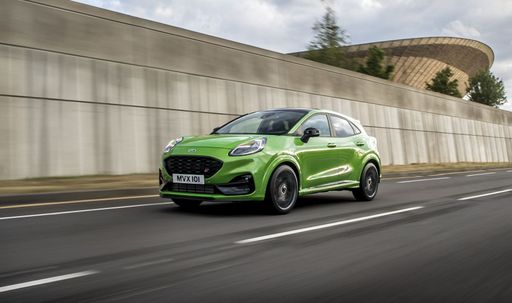
@ Ford Motor Company / Ford Media Center
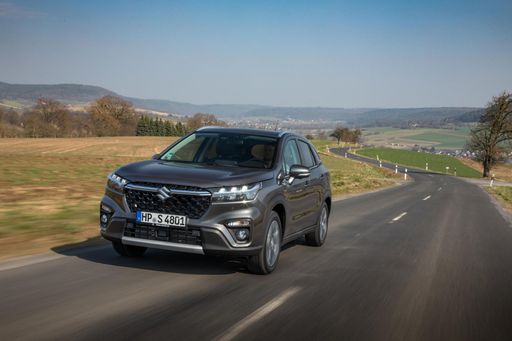
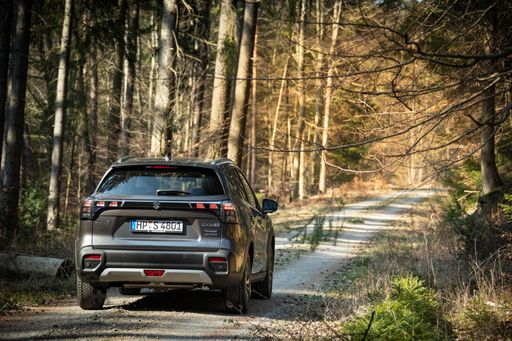
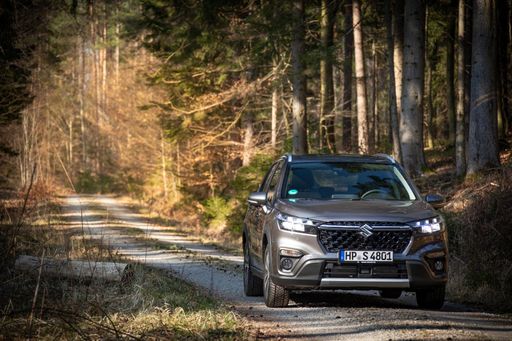
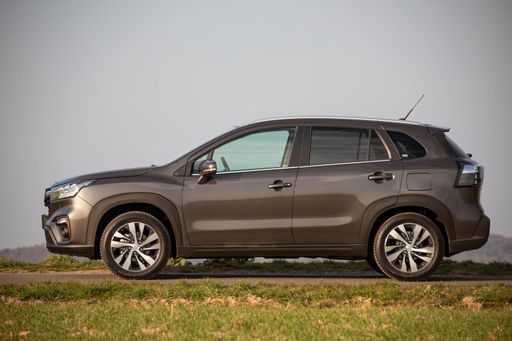
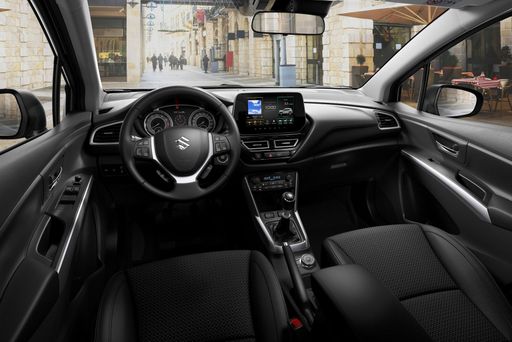
@ Suzuki Motor Corporation
VS

Ford Puma vs Suzuki S-Cross – Which car suits you better?

Everyday use, family trips or long-distance drives – here’s where the differences show.
Discover whether Ford Puma or Suzuki S-Cross fits your lifestyle better.

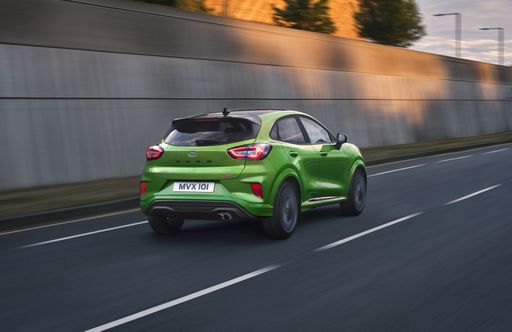
Puma @ Ford Motor Company / Ford Media Center

The Compact SUV Showdown: Ford Puma vs Suzuki S-Cross

In the dynamic world of compact SUVs, two models that continuously spark interest are the Ford Puma and the Suzuki S-Cross. Each offers a unique blend of style, efficiency, and technology, suited for a variety of drivers. In this comparison, we delve into the technical aspects, innovative features, and overall performance of these two contenders.
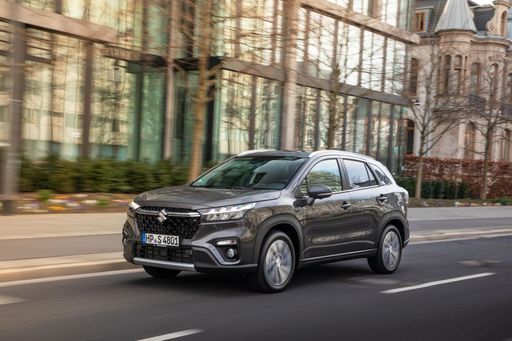
S-Cross @ Suzuki Motor Corporation

Design and Dimensions

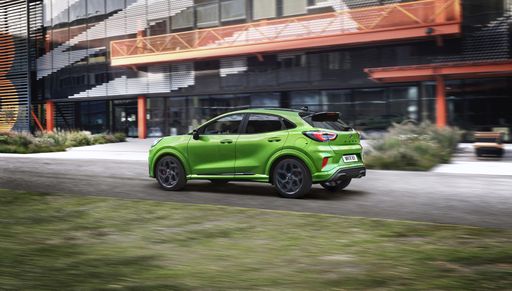
The Ford Puma presents itself as a sleek and sporty SUV with lengths ranging between 4,186 mm to 4,226 mm, a width of 1,805 mm, and a height ranging from 1,550 mm to 1,555 mm. It features a modern exterior that encapsulates its urban-ready nature.

On the other hand, the Suzuki S-Cross stands slightly longer at 4,300 mm, with a width of 1,785 mm and a height of 1,580 mm. The S-Cross showcases a more rugged appearance, ideal for those who appreciate a blend of style with an adventurous edge.

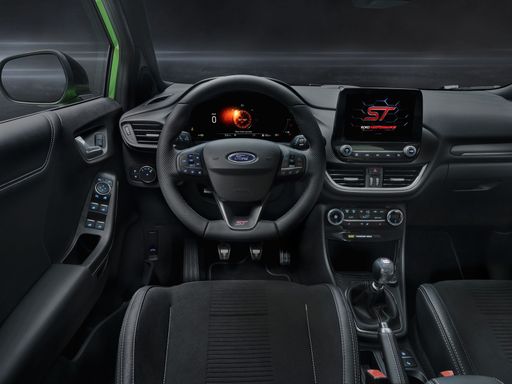
Puma @ Ford Motor Company / Ford Media Center

Performance and Engine Options

Ford offers the Puma with a diverse powertrain lineup, including Petrol Mild Hybrid Electric Vehicle (MHEV) and fully Electric variants. The power output ranges from 125 HP to 168 HP, with torque figures from 170 Nm to 290 Nm. The Puma's engine is a three-cylinder unit with a compact engine capacity of 999 cm³, promising agile performance. With acceleration times from 0 to 100 km/h as quick as 7.4 seconds, it ensures a responsive drive.

The Suzuki S-Cross provides two engine types: Full Hybrid and Petrol MHEV. It offers power figures of 116 HP and 129 HP, with a higher engine capacity of either 1,462 cm³ or 1,373 cm³. The S-Cross accelerates to 100 km/h in 9.5 seconds, powered by a four-cylinder engine that churns out 235 Nm of torque.

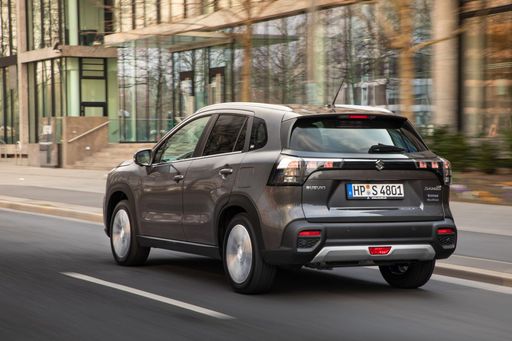
S-Cross @ Suzuki Motor Corporation

Fuel Efficiency and Environmental Impact

Fuel efficiency is a strong point for both SUVs. The Ford Puma has a hybrid offering with an impressive consumption rate of 5.4 to 6 L/100 km and CO2 emissions as low as 0 g/km in its electric version. The Puma Electric offers a promising electric range of up to 376 km with a battery capacity of 43 kWh.

The Suzuki S-Cross stands out with fuel consumption figures ranging from 5.1 to 5.8 L/100 km and CO2 emissions from 116 to 131 g/km. Both models incorporate green features, with the S-Cross having a front-wheel-drive and an all-wheel-drive option for versatility.

Puma @ Ford Motor Company / Ford Media Center

Capacity and Usability

Practicality is key in this segment, and the Ford Puma offers a generous trunk capacity of 456 to 523 liters along with a 42-liter fuel tank. It can carry a payload of up to 469 kg, allowing for more luggage and passenger room, thanks to its thoughtful design.

The Suzuki S-Cross, with a trunk capacity of 430 liters and a larger 47-liter fuel tank, also balances spaciousness and efficiency. It accommodates a payload ranging from 375 to 405 kg, catering to everyday needs with ease.

S-Cross @ Suzuki Motor Corporation

Conclusion

Choosing between the Ford Puma and the Suzuki S-Cross comes down to individual preferences and needs. The Puma leans towards those seeking a sportier urban vehicle with hybrid and electric efficiencies, while the S-Cross appeals to drivers looking for a rugged, more traditional SUV feel with hybrid capabilities. Both vehicles shine in fuel efficiency, modern design, and innovative technology, making them worthy contenders in the compact SUV market.

Here’s where it gets real: The technical differences in detail

Puma @ Ford Motor Company / Ford Media Center

Costs and Efficiency:

Price and efficiency are often the first things buyers look at. Here it becomes clear which model has the long-term edge – whether at the pump, the plug, or in purchase price.

Suzuki S-Cross has a slightly advantage in terms of price – it starts at 21800 £, while the Ford Puma costs 24800 £. That’s a price difference of around 3009 £.

Fuel consumption also shows a difference: Suzuki S-Cross manages with 5.30 L and is therefore barely noticeable more efficient than the Ford Puma with 5.40 L. The difference is about 0.10 L per 100 km.

S-Cross @ Suzuki Motor Corporation

Engine and Performance:

Power, torque and acceleration are the classic benchmarks for car enthusiasts – and here, some clear differences start to show.

When it comes to engine power, the Ford Puma has a evident edge – offering 168 HP compared to 110 HP. That’s roughly 58 HP more horsepower.

In terms of top speed, the Ford Puma performs somewhat better – reaching 210 km/h, while the Suzuki S-Cross tops out at 185 km/h. The difference is around 25 km/h.

There’s also a difference in torque: Ford Puma pulls to a small extent stronger with 290 Nm compared to 235 Nm. That’s about 55 Nm difference.

Space and Everyday Use:

Cabin size, boot volume and payload all play a role in everyday practicality. Here, comfort and flexibility make the difference.

Both vehicles offer seating for 5 people.

In curb weight, Suzuki S-Cross is minimal lighter – 1280 kg compared to 1316 kg. The difference is around 36 kg.

In terms of boot space, the Ford Puma offers to a small extent more room – 523 L compared to 430 L. That’s a difference of about 93 L.

In maximum load capacity, the Ford Puma performs slight better – up to 1283 L, which is about 53 L more than the Suzuki S-Cross.

When it comes to payload, Ford Puma a bit takes the win – 469 kg compared to 405 kg. That’s a difference of about 64 kg.

Who wins the race?

The Ford Puma proves to be secures victory with a clear margin and therefore becomes our DriveDuel Champion!
Ford Puma is the better all-rounder in this comparison.

from about £24,800
Puma @ Ford Motor Company / Ford Media Center

Ford Puma

  • Engine Type : Electric, Petrol MHEV
  • Transmission : Automatic, Manuel
  • Drive Type : Front-Wheel Drive
  • Power HP : 125 - 168 HP
  • Consumption L/100km : 5.4 - 5.9 L
  • Consumption kWh/100km : 13.1 - 13.9 kWh
  • Electric Range : 361 - 376 km

Ford Puma

5 (1)
rate

The Ford Puma is a cheeky compact crossover that blends sporty styling with city-friendly practicality, giving drivers a surprisingly fun and composed ride. With clever storage tricks and a lively personality, it’s a smart pick for buyers who want enjoyment without fuss.

details

Suzuki S-Cross

4.5 (2)
rate

The Suzuki S-Cross is a neatly packaged crossover that puts everyday practicality ahead of showy theatrics, offering a comfortable cabin and predictable handling that suit family life and weekend errands alike. It’s not a headline-grabber, but its sensible packaging, low-key charm and reputation for reliability make it a shrewd choice for buyers who prefer smart value over flash.

details
Ford Puma
Suzuki S-Cross
Puma @ Ford Motor Company / Ford Media Center
S-Cross @ Suzuki Motor Corporation

Costs and Consumption

Price
24800 - 36300 £
Price
21800 - 34200 £
Consumption L/100km
5.4 - 5.9 L
Consumption L/100km
5.3 - 5.8 L
Consumption kWh/100km
13.1 - 13.9 kWh
Consumption kWh/100km
-
Electric Range
361 - 376 km
Electric Range
-
Battery Capacity
43 kWh
Battery Capacity
-
co2
0 - 135 g/km
co2
119 - 138 g/km
Fuel tank capacity
42 L
Fuel tank capacity
47 L

Dimensions and Body

Body Type
SUV
Body Type
SUV
Seats
5
Seats
5
Doors
5
Doors
5
Curb weight
1316 - 1563 kg
Curb weight
1280 - 1385 kg
Trunk capacity
456 - 523 L
Trunk capacity
430 L
Length
4186 - 4226 mm
Length
4305 mm
Width
1805 mm
Width
1785 mm
Height
1550 - 1555 mm
Height
1580 mm
Max trunk capacity
1216 - 1283 L
Max trunk capacity
1230 L
Payload
367 - 469 kg
Payload
395 - 405 kg

Engine and Performance

Engine Type
Electric, Petrol MHEV
Engine Type
Petrol MHEV
Transmission
Automatic, Manuel
Transmission
Manuel, Automatic
Transmission Detail
Reduction Gearbox, Manual Gearbox, Dual-Clutch Automatic
Transmission Detail
Manual Gearbox, Automatic Gearbox
Drive Type
Front-Wheel Drive
Drive Type
Front-Wheel Drive, All-Wheel Drive
Power HP
125 - 168 HP
Power HP
110 HP
Acceleration 0-100km/h
7.4 - 9.8 s
Acceleration 0-100km/h
-
Max Speed
160 - 210 km/h
Max Speed
180 - 185 km/h
Torque
170 - 290 Nm
Torque
235 Nm
Number of Cylinders
3
Number of Cylinders
4
Power kW
92 - 124 kW
Power kW
81 kW
Engine capacity
999 cm3
Engine capacity
1373 cm3

General

Model Year
2025
Model Year
2025
CO2 Efficiency Class
A, D
CO2 Efficiency Class
D, E
Brand
Ford
Brand
Suzuki
Is the Ford Puma offered with different drivetrains?

The Ford Puma is offered with Front-Wheel Drive.

The prices and data displayed are estimates based on German list prices and may vary by country. This information is not legally binding.