VS

Volvo EX30 vs Ford Puma comparison

Compare performance (428 HP vs 168 HP), boot space and price (33,000 £ vs 23,900 £ ) at a glance. Find out which car is the better choice for you – Volvo EX30 or Ford Puma?

Volvo EX30 vs Ford Puma: Key differences

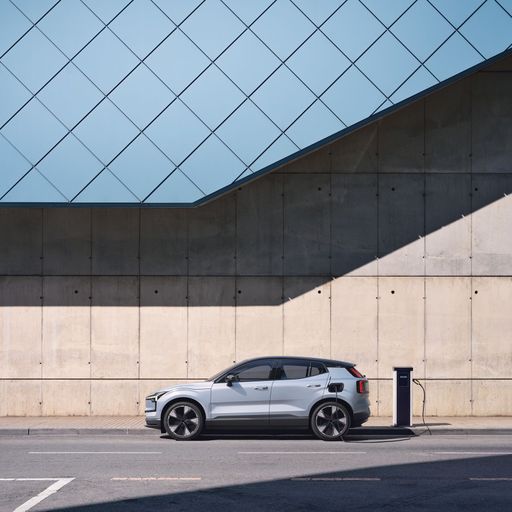
Volvo EX30

3.6 (5 Reviews)
rate
  • significantly more power
  • moderately more electric range
  • considerably quicker 0–100 km/h

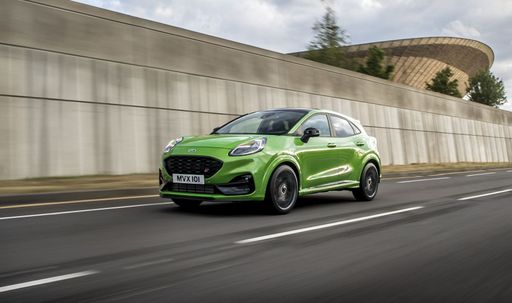
Ford Puma

3 (11 Reviews)
rate
  • markedly cheaper
  • visibly more efficient
  • clearly lighter

All details on performance, efficiency, range and trunk space can be found in the technical comparison below – including user reviews for both models.

EX30

A New Era of Compact SUVs: Ford Puma vs Volvo EX30

In today's competitive SUV market, the Ford Puma and Volvo EX30 are carving their niches by merging innovation and distinctiveness. Both offer a modern driving experience, but their approaches couldn't be more different. Let's dive into a detailed comparison of these two intriguing models to see what sets them apart.
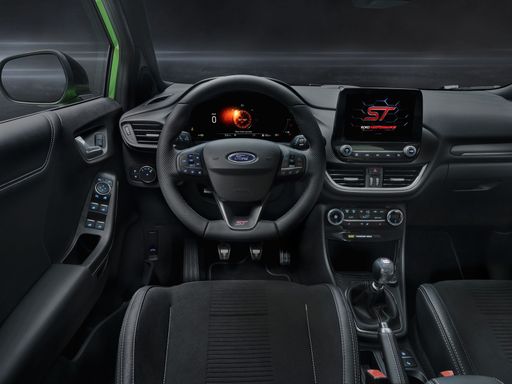
Puma

Design and Dimensions

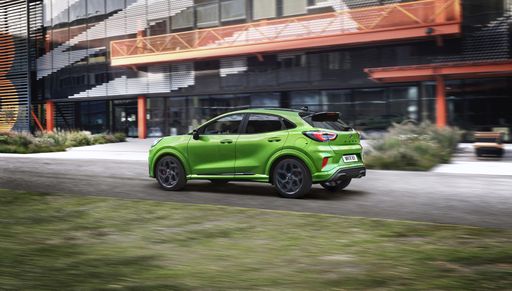
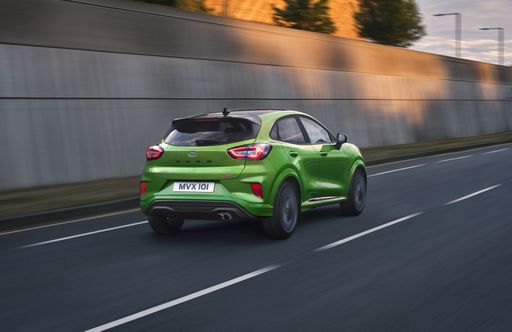
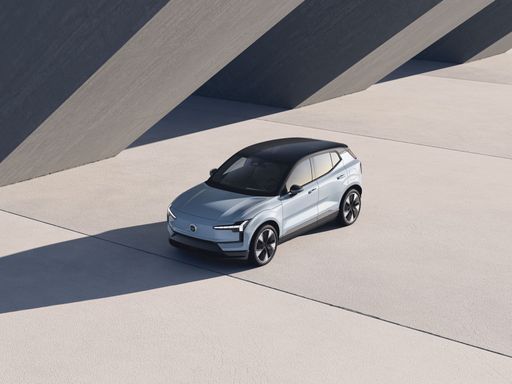
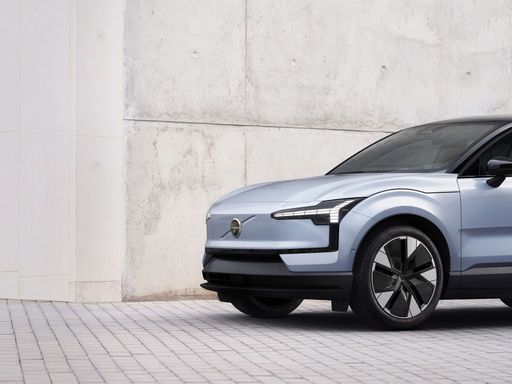
The Ford Puma and Volvo EX30 embrace the contemporary SUV aesthetic, each with a unique twist. The Puma rides on a slightly shorter length ranging from 4186 mm to 4226 mm, compared to the EX30's 4233 mm. Both, however, maintain a compact width, with the Puma at 1805 mm and the EX30 at 1837 mm. The height difference is negligible, with the Puma standing at 1550 mm to 1555 mm and the EX30 ranging from 1549 mm to 1567 mm. Despite their compact footprints, both allow for a roomy interior with five doors and a seating capacity for five passengers.

EX30

Performance and Powertrains

The Ford Puma offers versatility with its combination of Petrol MHEV and Electric powertrains. It presents a range of power outputs from 125 HP to 168 HP, paired with either a manual or dual-clutch automatic transmission. Driving enthusiasts can enjoy a range of acceleration speeds—from 7.4 seconds to 9.8 seconds for 0-100 km/h—and a maximum speed of up to 210 km/h.

In contrast, the Volvo EX30 focuses solely on electric propulsion, offering formidable power with its two choices: a 272 HP or a thrilling 428 HP setup. Its acceleration truly shines, going from 0 to 100 km/h in a mere 3.6 to 5.7 seconds, though its top speed is capped at 180 km/h. The EX30 is available with rear-wheel and all-wheel drive systems, enhancing its versatility on various terrains.

Puma

Efficiency and Range

Fuel efficiency is a strong suit for the Ford Puma's petrol engines, boasting consumption rates between 5.4 L/100km and 6 L/100km. Its electric variant offers a consumption of 13.1 to 13.7 kWh/100km, granting a respectable electric range of up to 376 km.

On the electric frontier, the Volvo EX30 offers battery capacities of 49 kWh and 65 kWh. With consumption ranging from 17 kWh/100km to 18.7 kWh/100km, it provides an impressive range of up to 476 km, making it an excellent choice for longer journeys on electric power alone.

EX30

Interior and Cargo

Interior space is vital for family-oriented SUVs. The Ford Puma excels with a trunk capacity of 456 L to 523 L, accommodating various lifestyle needs. Meanwhile, the Volvo EX30, though smaller with 318 L of trunk space, promises high-quality materials and cutting-edge technology inside the cabin, living up to Volvo's legacy of luxury.

Puma

Innovative Features

The Ford Puma boasts a variety of tech-savvy features, including an array of driver assistance systems and a refined infotainment setup. On the environmental front, its MHEV (Mild Hybrid Electric Vehicle) system enriches its efficiency.

Volvo's EX30 takes innovation a notch higher with its all-electric architecture and advanced safety systems, part of Volvo's esteemed IntelliSafe technology suite. A particular highlight is its emphasis on eco-friendly materials and sustainable design, aligning with the brand's commitment to a greener future.

EX30

The Verdict

Both the Ford Puma and Volvo EX30 cater to the modern SUV enthusiast's spirit, yet point towards different directions. The Puma stands out with its diversity in powertrains and impressive interior space, perfect for those valuing versatility. Meanwhile, the EX30 represents a bold leap into the future with its electrifying performance and sustainable innovations, ideal for tech-savvy and eco-conscious drivers.

In the end, whether you lean towards Puma's hybrid versatility or the all-electric charisma of the EX30, both models promise a remarkable journey through the contemporary automotive landscape.

Here’s where it gets real: The technical differences in detail

EX30

Costs and Efficiency:

Price and efficiency are key factors when choosing a car – and this is often where the real differences emerge.

Ford Puma is markedly cheaper – starting at 23,900 £ , while the Volvo EX30 costs 33,000 £ . That’s a price difference of around 9,077 £.

In terms of energy consumption, the Ford Puma is visibly more efficient: consuming 13 kWh/100km compared to 17 kWh/100km for the Volvo EX30. That’s a difference of about 4 kWh/100km.

As for electric range, the Volvo EX30 offers moderately more range – reaching up to 476 km, about 59 km more than the Ford Puma.

Puma

Engine and Performance:

Power, torque and acceleration are the classic benchmarks for car enthusiasts – and here, some clear differences start to show.

When it comes to engine power, the Volvo EX30 offers significantly more power – delivering 428 HP compared to 168 HP. That’s roughly 260 HP more horsepower.

When accelerating from 0 to 100 km/h, the Volvo EX30 is considerably quicker – completing the sprint in 3.6 s, while the Ford Puma takes 7.4 s. That’s about 3.8 s quicker.

There’s also a difference in torque: the Volvo EX30 delivers clearly more torque with 543 Nm compared to 290 Nm. That’s about 253 Nm more.

EX30

Space and Everyday Use:

Cabin size, boot volume and payload all play a role in everyday practicality. Here, comfort and flexibility make the difference.

Both vehicles offer seating for 5 people.

In terms of curb weight, Ford Puma is clearly lighter – 1,316 kg compared to 1,840 kg. The difference is around 524 kg.

When it comes to payload, the Ford Puma carries a bit more – 469 kg compared to 390 kg. That’s a difference of about 79 kg.

Who wins the race in the data check?

The Volvo EX30 is clearly superior overall in the objective data comparison.
This result only shows which model scores more points on paper – not which of the two cars feels right for you.

from £33,000
EX30

Volvo EX30

  • Engine Type : Electric
  • Transmission : Automatic
  • Drive Type : Rear-Wheel Drive, All-Wheel Drive
  • Power HP : 272 - 428 HP
  • Consumption kWh/100km : 17 - 18.3 kWh/100km
  • Electric Range : 339 - 476 km
Volvo EX30
Ford Puma

Costs and Consumption

View detailed analysis

Engine and Performance

View detailed analysis

Dimensions and Body

View detailed analysis

Volvo EX30

The Volvo EX30 arrives as a compact electric with crisp Scandinavian design and a cheeky personality, proving you can be serious about safety and still enjoy a grin on your commute. Its cabin is cleverly packaged and delightfully easy to live with, offering smart tech and practical touches that make it feel like a grown-up's city car with a sense of fun.

details

Ford Puma

The Ford Puma is a cheeky compact crossover that blends sporty styling with city-friendly practicality, giving drivers a surprisingly fun and composed ride. With clever storage tricks and a lively personality, it’s a smart pick for buyers who want enjoyment without fuss.

details
Volvo EX30
Ford Puma

Costs and Consumption

Price
33,000 - 49,100 £
Price
23,900 - 36,300 £
Consumption L/100km
-
Consumption L/100km
5.4 - 5.9 L/100km
Consumption kWh/100km
17 - 18.3 kWh/100km
Consumption kWh/100km
13 - 13.7 kWh/100km
Electric Range
339 - 476 km
Electric Range
404 - 417 km
Battery Capacity
49 - 65 kWh
Battery Capacity
-
co2
0 g/km
co2
0 - 135 g/km
Fuel tank capacity
-
Fuel tank capacity
-

Dimensions and Body

Body Type
SUV
Body Type
SUV
Seats
5
Seats
5
Doors
5
Doors
-
Curb weight
1,840 - 1,960 kg
Curb weight
1,316 - 1,563 kg
Trunk capacity
318 L
Trunk capacity
-
Length
4,233 mm
Length
-
Width
1,838 mm
Width
1,805 mm
Height
1,550 mm
Height
-
Max trunk capacity
1,000 L
Max trunk capacity
-
Payload
370 - 390 kg
Payload
367 - 469 kg

Engine and Performance

Engine Type
Electric
Engine Type
Petrol MHEV, Electric
Transmission
Automatic
Transmission
Manuel, Automatic
Transmission Detail
Reduction Gearbox
Transmission Detail
Manual Gearbox, Dual-Clutch Automatic, Reduction Gearbox
Drive Type
Rear-Wheel Drive, All-Wheel Drive
Drive Type
Front-Wheel Drive
Power HP
272 - 428 HP
Power HP
125 - 168 HP
Acceleration 0-100km/h
3.6 - 5.7 s
Acceleration 0-100km/h
7.4 - 9.8 s
Max Speed
180 km/h
Max Speed
-
Torque
343 - 543 Nm
Torque
170 - 290 Nm
Number of Cylinders
-
Number of Cylinders
3
Power kW
200 - 315 kW
Power kW
92 - 124 kW
Engine capacity
-
Engine capacity
999 cm3

General

Model Year
2,024 - 2,025
Model Year
2,025 - 2,026
CO2 Efficiency Class
A
CO2 Efficiency Class
D, A
Brand
Volvo
Brand
Ford
DriveDuel uses data analysis and artificial intelligence to evaluate vehicle data and create content. Content is regularly reviewed and improved. The displayed prices are estimates based on German list prices, adjusted to the respective country’s VAT. Country-specific registration taxes are not included. This information is not legally binding.