VS

Volvo EX40 vs Audi Q4 e-tron comparison

Compare performance (442 HP vs 340 HP), boot space and price (42,800 £ vs 39,600 £ ) at a glance. Find out which car is the better choice for you – Volvo EX40 or Audi Q4 e-tron?

Volvo EX40 vs Audi Q4 e-tron: Key differences

Volvo EX40

5 (1 Reviews)
rate
  • clearly more power
  • very slightly more electric range
  • a bit quicker 0–100 km/h

Audi Q4 e-tron

4.9 (2 Reviews)
rate
  • barely cheaper
  • only slightly more efficient
  • very slightly lighter
  • noticeably more trunk space
EX40

Street Presence and First Impressions

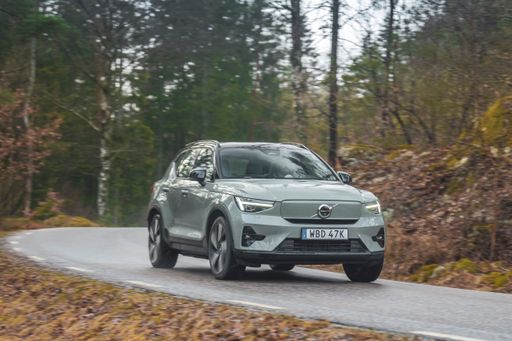
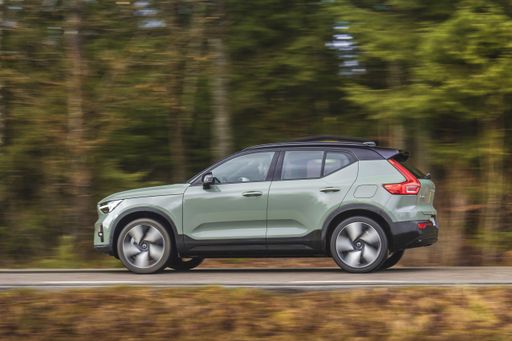
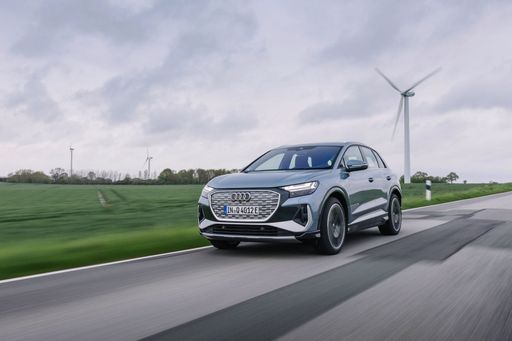
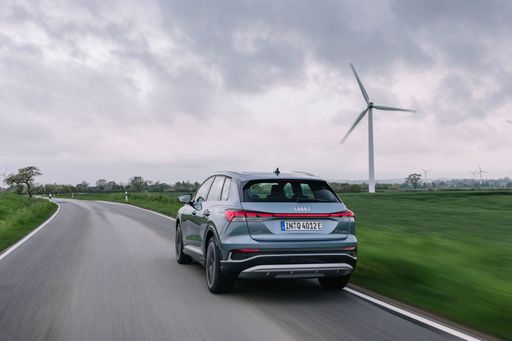
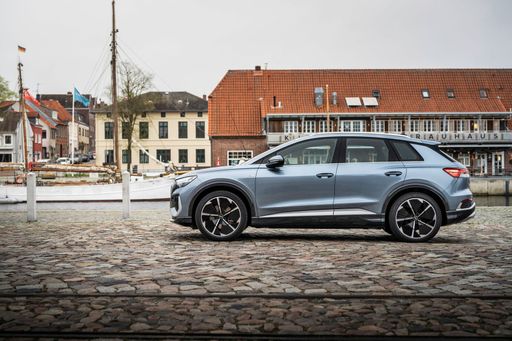
The two EVs wear different personalities on their sleeves: the Audi Q4 e-tron feels composed and classically premium, with a look that says quiet confidence, while the Volvo EX40 arrives with a minimalist, Scandinavian poise that favours clarity over flash. Up close, materials and finishing tell a subtle story about intent — one leans into traditional luxury cues, the other into modern restraint. Both will turn heads for different reasons, so your choice starts with how you want to arrive.

Q4 e-tron

How They Feel on a Twist and a Traffic Light

Driving the Audi Q4 e-tron is about planted composure and predictable responses; it rewards calm inputs and feels reassuring on long, flowing roads. The Volvo EX40 is more animated off the line and gives a sportier nudge when you ask for it, yet it keeps a relaxed composure when cruising. In everyday city traffic both are civilized, but their characters diverge when you push: one soothes, the other engages.

EX40

Cabin Comfort and Everyday Usability

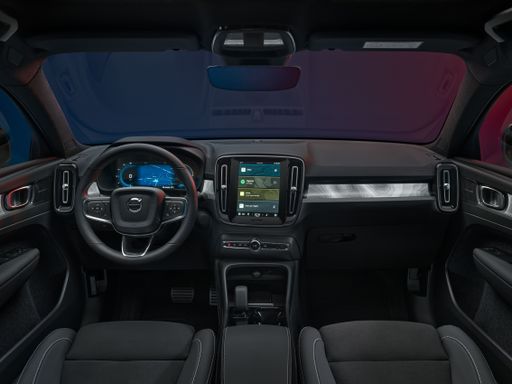
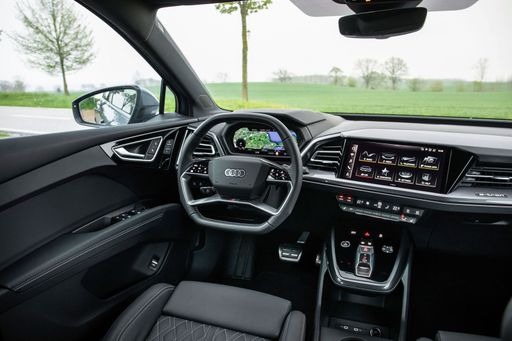
Inside, the Audi emphasises tailored comfort with supportive seats and a cabin that feels finished to a high standard, making long stints easier to enjoy. The Volvo takes a simpler, more ergonomic approach — controls fall to hand naturally and the overall layout breathes, helping passengers relax quickly. Both cabins are pleasant environments; your preference will come down to whether you favour plush refinement or a clean, uncluttered living space.

Q4 e-tron

Practicality for Real Life

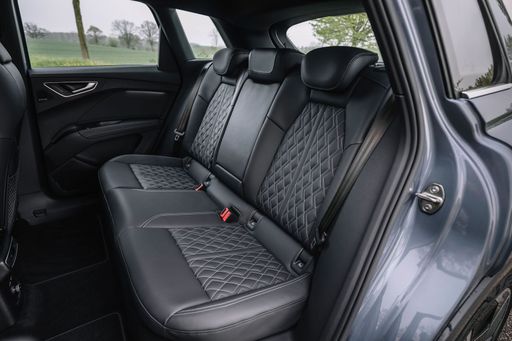
When it comes to hauling luggage, groceries or a weekend’s worth of gear, packaging matters and each car has its own take on practicality: one offers a more traditional trunk arrangement while the other prioritises interior space and flexible usage. Visibility, door apertures and clever stowage all influence daily usability, and both make life straightforward for families and commuters alike. The true test is how they adapt to the small, annoying chores of life — and they both handle that with ease, just in different styles.

EX40

Technology, Infotainment and Daily Interaction

Infotainment systems and driver aids shape your relationship with a car as much as its steering, and here the differences are about philosophy rather than capability: one system favours tactile familiarity and layered menus, the other leans into a clean, card-based interface that keeps things simple. Voice assistants, connectivity and driver aids are competent in both, but the way you interact — tap, twist or speak — will influence how effortless the day-to-day feels. Ergonomics and logical layout win more loyalties than headline features in the long run.

Q4 e-tron

Who Should Buy Which — Buyer Profiles

If you’re a commuter who prizes refined manners, a traditional sense of luxury and a quietly premium cabin, the Audi Q4 e-tron will feel like home very quickly. If you value a fresh, minimalist aesthetic, crisp interaction and a car that feels modern in both look and usability, the Volvo EX40 will likely fit better with your lifestyle. Both are excellent choices; it simply depends on whether you want your EV to soothe or to invigorate your daily drive.

Stick Around — The DriveDuel Verdict Awaits

We’ve walked the city streets, pushed the open road and lived with both cars long enough to understand their characters, but the final call needs a comprehensive tally across all chapters of ownership. Stay with us for the full breakdown and head-to-head scoring — the DriveDuel Champion will be revealed after this deep-dive.

Here’s where it gets real: The technical differences in detail

EX40

Costs and Efficiency:

When it comes to price and running costs, the biggest differences usually appear. This is often where you see which car fits your budget better in the long run.

Audi Q4 e-tron is barely cheaper – starting at 39,600 £ , while the Volvo EX40 costs 42,800 £ . That’s a price difference of around 3,291 £.

In terms of energy consumption, the Audi Q4 e-tron is only slightly more efficient: consuming 15.9 kWh/100km compared to 16.6 kWh/100km for the Volvo EX40. That’s a difference of about 0.7 kWh/100km.

As for electric range, the Volvo EX40 offers very slightly more range – reaching up to 576 km, about 22 km more than the Audi Q4 e-tron.

Q4 e-tron

Engine and Performance:

Under the bonnet, it becomes clear which model is tuned for sportiness and which one takes the lead when you hit the accelerator.

When it comes to engine power, the Volvo EX40 offers clearly more power – delivering 442 HP compared to 340 HP. That’s roughly 102 HP more horsepower.

When accelerating from 0 to 100 km/h, the Volvo EX40 is a bit quicker – completing the sprint in 4.6 s, while the Audi Q4 e-tron takes 5.4 s. That’s about 0.8 s quicker.

There’s no difference in top speed – both reach 180 km/h.

There’s also a difference in torque: the Audi Q4 e-tron delivers marginally more torque with 679 Nm compared to 670 Nm. That’s about 9 Nm more.

EX40

Space and Everyday Use:

Cabin size, boot volume and payload all play a role in everyday practicality. Here, comfort and flexibility make the difference.

Both vehicles offer seating for 5 people.

In terms of curb weight, Audi Q4 e-tron is very slightly lighter – 2,035 kg compared to 2,040 kg. The difference is around 5 kg.

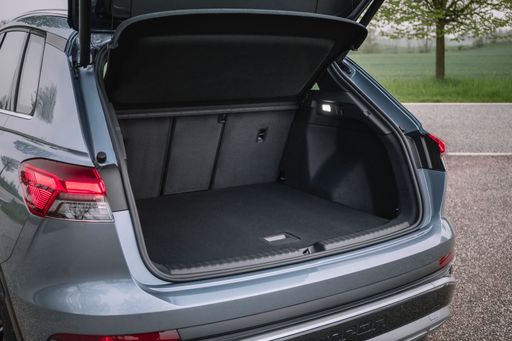
Looking at boot space, the Audi Q4 e-tron offers noticeably more boot space – 535 L compared to 410 L. That’s a difference of about 125 L.

For maximum load capacity, the Audi Q4 e-tron offers only slightly more capacity – up to 1,490 L, about 90 L more than the Volvo EX40.

When it comes to payload, the Audi Q4 e-tron carries marginally more – 515 kg compared to 480 kg. That’s a difference of about 35 kg.

Who wins the race in the data check?

The Volvo EX40 holds a slight edge in the objective data comparison.
This result only shows which model scores more points on paper – not which of the two cars feels right for you.

from £42,800
EX40

Volvo EX40

  • Engine Type : Electric
  • Transmission : Automatic
  • Drive Type : Rear-Wheel Drive, All-Wheel Drive
  • Power HP : 238 - 442 HP
  • Consumption kWh/100km : 16.6 - 17.6 kWh/100km
  • Electric Range : 480 - 576 km
Volvo EX40
Audi Q4 e-tron

Costs and Consumption

View detailed analysis

Engine and Performance

View detailed analysis

Dimensions and Body

View detailed analysis

Volvo EX40

The Volvo EX40 wraps Scandinavian calm and clever practicality into a compact electric package that feels both premium and refreshingly uncomplicated. It's the grown-up answer to flashier rivals — a safe, comfy, and city-friendly EV with thoughtful tech that makes everyday driving quietly satisfying.

details

Audi Q4 e-tron

The Audi Q4 e-tron brings Audi polish into the electric crossover scene, pairing a sleek exterior with a refined, airy interior that makes everyday driving feel distinctly premium. It’s an easy-to-live-with EV that balances comfort and real-world usability with intuitive tech, making it a smart choice for buyers who want electric mobility without giving up Audi character — and yes, it still looks good in the driveway.

details
Volvo EX40
Audi Q4 e-tron

Costs and Consumption

Price
42,800 - 58,200 £
Price
39,600 - 58,800 £
Consumption L/100km
-
Consumption L/100km
-
Consumption kWh/100km
16.6 - 17.6 kWh/100km
Consumption kWh/100km
15.9 - 17.4 kWh/100km
Electric Range
480 - 576 km
Electric Range
406 - 554 km
Battery Capacity
67 - 79 kWh
Battery Capacity
77 kWh
co2
0 g/km
co2
0 g/km
Fuel tank capacity
-
Fuel tank capacity
-

Dimensions and Body

Body Type
SUV
Body Type
SUV
Seats
5
Seats
5
Doors
5
Doors
5
Curb weight
2,040 - 2,170 kg
Curb weight
2,035 - 2,235 kg
Trunk capacity
410 L
Trunk capacity
520 - 535 L
Length
4,440 mm
Length
4,588 mm
Width
1,863 mm
Width
1,865 mm
Height
1,647 mm
Height
1,614 - 1,632 mm
Max trunk capacity
1,400 L
Max trunk capacity
1,460 - 1,490 L
Payload
430 - 480 kg
Payload
505 - 515 kg

Engine and Performance

Engine Type
Electric
Engine Type
Electric
Transmission
Automatic
Transmission
Automatic
Transmission Detail
Reduction Gearbox
Transmission Detail
Reduction Gearbox
Drive Type
Rear-Wheel Drive, All-Wheel Drive
Drive Type
Rear-Wheel Drive, All-Wheel Drive
Power HP
238 - 442 HP
Power HP
204 - 340 HP
Acceleration 0-100km/h
4.6 - 7.3 s
Acceleration 0-100km/h
5.4 - 8.1 s
Max Speed
180 km/h
Max Speed
180 km/h
Torque
420 - 670 Nm
Torque
310 - 679 Nm
Number of Cylinders
-
Number of Cylinders
-
Power kW
175 - 325 kW
Power kW
150 - 250 kW
Engine capacity
-
Engine capacity
-

General

Model Year
2,024
Model Year
2,023 - 2,025
CO2 Efficiency Class
A
CO2 Efficiency Class
A
Brand
Volvo
Brand
Audi
DriveDuel uses data analysis and artificial intelligence to evaluate vehicle data and create content. Content is regularly reviewed and improved. The displayed prices are estimates based on German list prices, adjusted to the respective country’s VAT. Country-specific registration taxes are not included. This information is not legally binding.