VS

CUPRA Tavascan vs Volvo EX40 comparison

Compare performance (340 HP vs 442 HP), boot space and price (45,700 £ vs 45,200 £ ) at a glance. Find out which car is the better choice for you – CUPRA Tavascan or Volvo EX40?

CUPRA Tavascan vs Volvo EX40: Key differences

CUPRA Tavascan

4.4 (2 Reviews)
rate
  • only slightly more efficient
  • markedly more trunk space
details

Volvo EX40

4.5 (2 Reviews)
rate
  • barely cheaper
  • clearly more power
  • barely more electric range
  • moderately quicker 0–100 km/h
  • barely lighter
details

All details on performance, efficiency, range and trunk space can be found in the technical comparison below – including user reviews for both models.

By Achim Sedelmaier

Tavascan

Overview — CUPRA Tavascan VS Volvo EX40

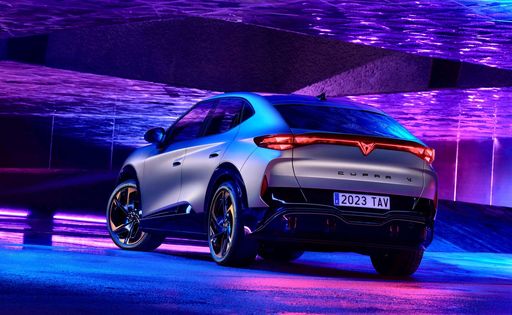
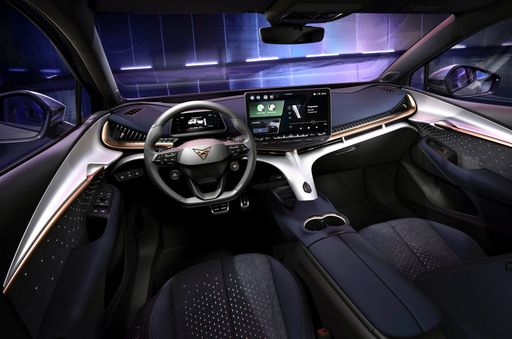
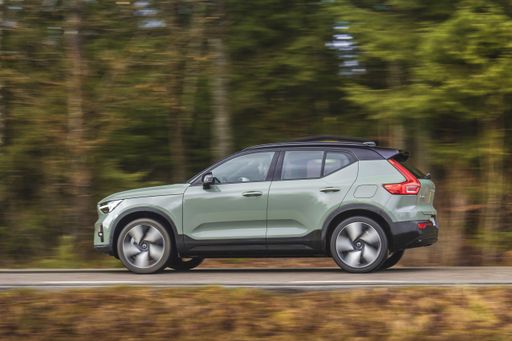
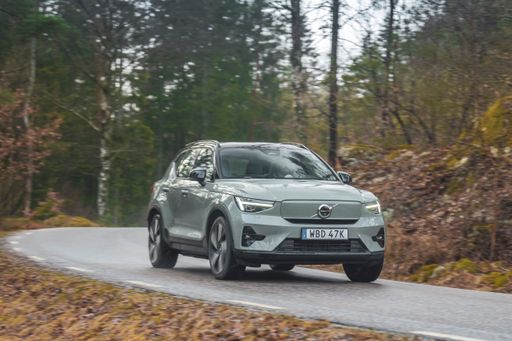
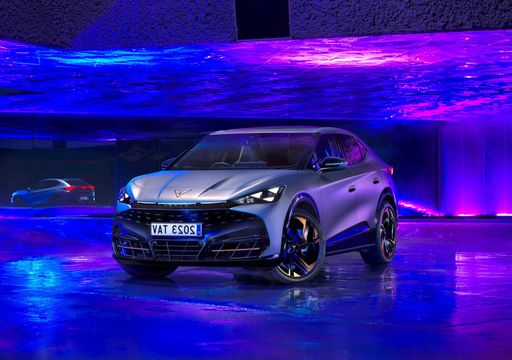
CUPRA Tavascan VS Volvo EX40 sets a design‑forward, coupé‑SUV with a long‑distance temperament against a compact, comfort‑first Scandinavian EV. The CUPRA Tavascan trades bold interior styling and a roomy, practical boot for a more dramatic silhouette and a firmer edge when options push it that way. The Volvo EX40 rewards buyers who prioritise calm ergonomics, excellent front‑seat comfort and integrated route planning over sporty flair. Both feel premium in different ways: the Tavascan through visual drama and usable luggage space, the EX40 through seat comfort, simple packaging and a composed driving persona. Read on to see which trade‑offs matter most for your daily life and longer trips.
EX40

Character and driving feel

The CUPRA Tavascan drives with a tauter, more decisive character: steering is precise and chassis tuning leans toward engagement, especially with adaptive damping fitted. The Volvo EX40 is the antithesis — deliberately calm, composed and tuned for confidence rather than cornering thrills, so you feel insulated from road irregularities. If you enjoy sportier responses and a car that communicates more of the road, the Tavascan will please; if you want effortless, predictable progress and less driver workload, the EX40 will feel more mature. Note that the Tavascan’s braking and low‑speed reku transition can feel uneven at times, whereas the EX40 sacrifices feedback for reassuring smoothness.

Tavascan

Comfort and long‑distance behaviour

Both cars are surprisingly relaxed on the motorway, but they get there by different routes: the CUPRA Tavascan is exceptionally quiet and stable at speed, making long runs feel less tiring when you keep a steady pace. The Volvo EX40 leans harder on seat ergonomics — its front seats are among the class leaders for long‑haul support — and its calm interior makes highway miles mentally easy. Real‑world charging and range habits affect long trips: the Tavascan’s charging limits mean you should expect more deliberate planning of stops, while the EX40’s integrated navigation and charging planning smooth that orchestration. On rougher roads the Tavascan can feel firmer with large wheels fitted, whereas the EX40 tends to prioritise a softer, more forgiving ride.

EX40

Practicality, cargo and family use

The CUPRA Tavascan wins on rear cargo usability with a squarer, deeper boot that swallows everyday family gear more readily, but its coupé roofline trims headroom for tall rear passengers. The Volvo EX40 compensates with clever packaging: a versatile load floor and a small front trunk add practical touches that ease grocery runs and weekend kit. For families, the Tavascan’s ISOFIX layout (including a front‑passenger anchorage option) and larger payload feel very useful, while the EX40 offers a roomier rear seat experience for adults over longer journeys. Visibility and everyday ergonomics split further — the Tavascan’s small rear window and lack of a wiper complicate tight manoeuvres, whereas the EX40’s camera system and compact footprint make parking less stressful despite a sometimes low‑res display.

Tavascan

City friendliness and daily usability

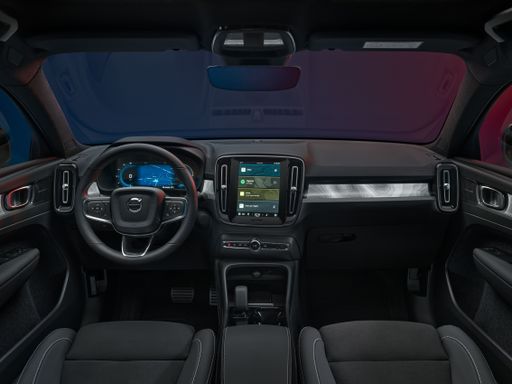
In urban use the Volvo EX40’s compact dimensions, light steering and intuitive Google integration make it the easier commuter: route planning, charging stops and one‑pedal traffic flow are well integrated into daily patterns. The CUPRA Tavascan is surprisingly nimble for its size and offers a small turning circle, but its design choices—haptic sliders, touch‑heavy controls and occasional software quirks—can feel less forgiving during short trips. Both benefit from active safety systems, yet their human interfaces differ: Volvo keeps functions logically framed in its minimalist cabin, while CUPRA trades some simplicity for visual drama and tactile flair that can be hit or miss. If quick, stress‑free city driving is a priority, the EX40 leans more user‑friendly; if you value style and a firmer, more planted feel even around town, the Tavascan has the edge.

EX40

Buyer fit and practical trade‑offs before the tech sheet

Choose the CUPRA Tavascan if you want a standout design, a large, usable boot and a driving personality that skews sporty without being a track car — ideal for design‑affine families and motorway commuters who value quiet cruising but can live with longer charging stops. Opt for the Volvo EX40 if you prioritise seat comfort, straightforward urban usability, dependable route planning and a calmer, safety‑oriented cabin environment that makes daily life easier. Both have quirks worth checking on a test drive: inspect rear visibility and infotainment behaviour in the Tavascan, and evaluate infotainment stability and real‑world range in the EX40. The technical comparison that follows will map those trade‑offs into concrete figures so you can match the numbers to the life you actually lead.

Here’s where it gets real: The technical differences in detail

Tavascan

Costs and Efficiency:

Looking at overall running costs, both models reveal some interesting differences in everyday economy.

Volvo EX40 is barely cheaper – starting at 45,200 £ , while the CUPRA Tavascan costs 45,700 £ . That’s a price difference of around 472 £.

In terms of energy consumption, the CUPRA Tavascan is only slightly more efficient: consuming 15.9 kWh/100km compared to 16.6 kWh/100km for the Volvo EX40. That’s a difference of about 0.7 kWh/100km.

As for electric range, the Volvo EX40 offers barely more range – reaching up to 576 km, about 23 km more than the CUPRA Tavascan.

EX40

Engine and Performance:

Under the bonnet, it becomes clear which model is tuned for sportiness and which one takes the lead when you hit the accelerator.

When it comes to engine power, the Volvo EX40 offers clearly more power – delivering 442 HP compared to 340 HP. That’s roughly 102 HP more horsepower.

When accelerating from 0 to 100 km/h, the Volvo EX40 is moderately quicker – completing the sprint in 4.6 s, while the CUPRA Tavascan takes 5.5 s. That’s about 0.9 s quicker.

There’s also a difference in torque: the CUPRA Tavascan delivers only slightly more torque with 679 Nm compared to 670 Nm. That’s about 9 Nm more.

Tavascan

Space and Everyday Use:

Cabin size, boot volume and payload all play a role in everyday practicality. Here, comfort and flexibility make the difference.

Both vehicles offer seating for 5 people.

In terms of curb weight, Volvo EX40 is barely lighter – 2,040 kg compared to 2,178 kg. The difference is around 138 kg.

Looking at boot space, the CUPRA Tavascan offers markedly more boot space – 540 L compared to 410 L. That’s a difference of about 130 L.

When it comes to payload, the CUPRA Tavascan carries marginally more – 522 kg compared to 480 kg. That’s a difference of about 42 kg.

Who wins the race in the data check?

The Volvo EX40 has the upper hand in the objective data comparison.
This result only shows which model scores more points on paper – not which of the two cars feels right for you.

from £45,200
EX40

Volvo EX40

  • Engine Type : Electric
  • Transmission : Automatic
  • Drive Type : Rear-Wheel Drive, All-Wheel Drive
  • Power HP : 238 - 442 HP
  • Consumption kWh/100km : 16.6 - 17.6 kWh/100km
  • Electric Range : 477 - 576 km
CUPRA Tavascan
Volvo EX40

Costs and Consumption

View detailed analysis

Engine and Performance

View detailed analysis

Dimensions and Body

View detailed analysis

CUPRA Tavascan

The Cupra Tavascan blends athletic styling with a premium, driver-focused cabin, giving the electric crossover a distinctly sporty character. It feels poised and engaging on the road while standing out with bold design cues and a modern, high-quality finish.

details

Volvo EX40

The Volvo EX40 is a compact electric SUV that blends Scandinavian minimalism with a comfortable, high-quality interior suited to daily driving and longer trips. It prioritizes safety and intuitive technology, delivering a calm, refined experience that feels mature and easy to live with.

details
CUPRA Tavascan
Volvo EX40

Costs and Consumption

Price
45,700 - 49,600 £
Price
45,200 - 58,200 £
Consumption L/100km
-
Consumption L/100km
-
Consumption kWh/100km
15.9 - 17.1 kWh/100km
Consumption kWh/100km
16.6 - 17.6 kWh/100km
Electric Range
513 - 553 km
Electric Range
477 - 576 km
Battery Capacity
77 kWh
Battery Capacity
-
co2
0 g/km
co2
0 g/km
Fuel tank capacity
-
Fuel tank capacity
-

Dimensions and Body

Body Type
SUV
Body Type
SUV
Seats
5
Seats
5
Doors
5
Doors
-
Curb weight
2,178 - 2,273 kg
Curb weight
2,040 - 2,170 kg
Trunk capacity
540 L
Trunk capacity
410 L
Length
4,644 mm
Length
-
Width
1,861 mm
Width
1,863 mm
Height
1,597 mm
Height
-
Max trunk capacity
-
Max trunk capacity
-
Payload
507 - 522 kg
Payload
430 - 480 kg

Engine and Performance

Engine Type
Electric
Engine Type
Electric
Transmission
Automatic
Transmission
Automatic
Transmission Detail
Reduction Gearbox
Transmission Detail
Reduction Gearbox
Drive Type
Rear-Wheel Drive, All-Wheel Drive
Drive Type
Rear-Wheel Drive, All-Wheel Drive
Power HP
286 - 340 HP
Power HP
238 - 442 HP
Acceleration 0-100km/h
5.5 - 6.8 s
Acceleration 0-100km/h
4.6 - 7.3 s
Max Speed
180 km/h
Max Speed
-
Torque
545 - 679 Nm
Torque
420 - 670 Nm
Number of Cylinders
-
Number of Cylinders
-
Power kW
210 - 250 kW
Power kW
175 - 325 kW
Engine capacity
-
Engine capacity
-

General

Model Year
2024
Model Year
2,024 - 2,026
CO2 Efficiency Class
A
CO2 Efficiency Class
A
Brand
CUPRA
Brand
Volvo
DriveDuel uses data analysis and artificial intelligence to evaluate vehicle data and create content. Content is regularly reviewed and improved. The displayed prices are estimates based on German list prices, adjusted to the respective country’s VAT. Country-specific registration taxes are not included. This information is not legally binding.